
Pastor Derick Parfan

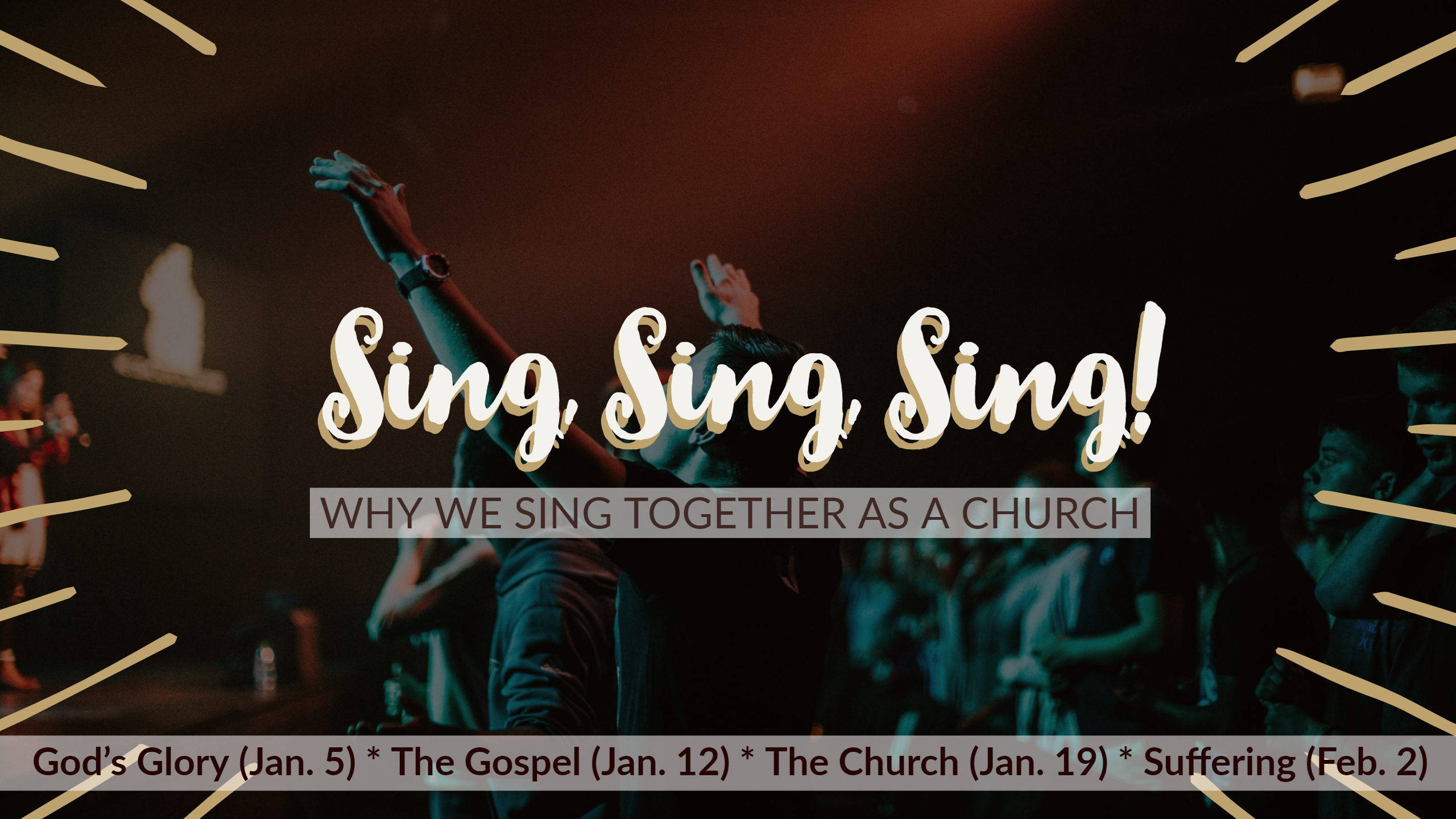
We will take a short break sa series sa 1 Corinthians to talk about a four-part sermon series on congregational singing, entitled “Sing, Sing, Sing!: Why We Sing Together as a Church.” This is probably not something na karaniwang iniisip ng mga church members, probably not something na most Christians will be excited about. Ako din naman di mahilig kumanta. Napilit lang na kumanta ng I Finally Found Someone nung campaign nung high school para maging mayor ng student council. Saka nasali din sa children’s choir nung bago kami sa church, saka Visionary Choir sa church nung youth pa ko. Lip sync lang talaga ginagawa ko nun. So bakit four Sundays ang ilalaan natin para pag-aralan ang pagkanta?
Let me explain. Noong 2016, nag-sabbatical leave ako sa pastoral ministry and most Sundays, we joined the worship gathering of Sovereign Grace Baptist Church. Merong uniqueness sa the way they sing. Mostly hymns, yung pastor minsan ang nagconduct ng singing, or ibang moderator. Meron lang keyboard and guitar. Yung mga tao, about 70-80, packed in a small worship hall, and we are encouraged to sing with them kasi maririnig mo sila.
Last September naman, sa 9Marks Intensive experience ko sa Capitol Hill Baptist Church sa Washington DC, na-amazed ako sa pagkanta nila, about 800 people singing together. Meron lang isang song leader, dalawang back ups, isa sa keyboard, isa sa guitar. Walang LCD projector! Meron lang printed song sheets. And they were singing! Laging may a capella sa bawat song. They were singing to God, they were also singing to one another! Very memorable sa akin when we sing “Christ is Mine Forevermore.”
My concern now is our church. I love this church. I love pastoring this church. I’m super-encouraged sa labor ng music ministry team natin, yung seriousness and devotion nila to lead us in singing. And I feel some of their frustrations kapag nakikita nila na merong ilan sa congregation ang hindi nagpaparticipate, at parang nanonood lang sa performance nila. They were spending countless hours to serve you every Sunday! We have to spend time to talk about this. We spend about 25-30 minutes of our worship service in singing, the rest ay prayer, Scripture reading, and sermon. But we seldom take time to reflect why we sing and why it matters.
Kung napag-aralan natin sa 1 Cor. 10:31 na maging yung eating and drinking and whatever else we do ay dapat nating gawin for the glory of God, kasi every part of our life is to glorify God, how much more when we are singing to God! Hindi lang dapat basta-basta. Singing matters because worship matters.
Sabi sa paliwanag ni Bob Kauflin kung bakit niya isinulat ang book na Worship Matters for worship leaders,
"Worship matters. It matters to God because he is the one ultimately worthy of all worship. It matters to us because worshipping God is the reason for which we were created. And it matters to every worship leader (and every church member), because we have no greater privilege than leading others (and ourselves!) to encounter the greatness of God. That's why it's so important to think carefully about what we do and why we do it."
We will spend four Sundays thinking carefully about what we do and why we do it. Kapag sinabi kong “congregational singing” ibig sabihin it is not about listening to songs on YouTube or Spotify, although that can be helpful spiritually. Hindi din ito pag-attend sa church na parang spectator lang sa performance ng ating worship team, na para bang nasa isang concert ka. I’m not talking about singing in general or individually sa bahay during your quiet time. I’m talking about Christian congregational singing, what we do every Sunday morning when we gather with our church family. Heto ang preview ng series natin:
Meron talagang mga taong mahilig kumanta. And if you are that type of person, para din sa ‘yo ‘to. Para mapag-isipan mo kung bakit tayo kumakanta, para maitama ang motivation ng heart mo, para mas ma-enganyo ka pa na magparticipate sa pagkanta. Pero ang iba, merong iba’t ibang dahilan kung bakit di kumakanta. Bakit nga kaya?
We may have many other reasons for not singing. Pero I believe the problem is the problem of our heart. “Out of the overflow of the heart, the mouth speaks,” sabi ng Panginoong Jesus (Matt. 12:34; Luke 6:45). Kapag walang lumalabas sa bibig mo, baka walang tinitibok ang puso mo para sa Diyos. And that is a serious problem. Kung walang tinitibok ang puso mo sa Diyos, it is because you really don’t know him well. Spiritual problem at theological problem ang hindi pagkanta sa pagsamba. Malaking problema ‘to sa maraming churches, even or especially sa mga churches na very lively, creative at superb ang worship performances. Those who are on stage are singing their hearts out, pero yung mga nasa congregation are not.
But there is hope. Sabi ng Christian composer at song-writer na si Keith Getty, “Congregational singing is far from dead, mainly because it’s connected to a source of life higher than cultural trends or modern comparisons” (“Why Congregational Singing Matters Today More than Ever”). And that source of life is God at work through his Word moving our hearts to sing praises to him.
So, titingnan natin ang itinuturo sa atin ng Diyos sa Bibliya sa sagot sa tanong na, “Bakit tayo kumakanta? Bakit tayo dapat kumanta?” Yung short answer diyan ay “to glorify God and to enjoy him forever,” sagot ng Westminster Shorter Catechism Question 1, “What is the chief end of man?” Ganun naman din ang sabi sa 1 Cor. 10:31 – do it for the glory of God. Ganyan din si Paul sa Rom. 11:36, “For from him and through him and to him are all things. To him be glory forever. Amen.” Kung ang singing is to glorify God, yung follow up question diyan ay, “How does singing glorify God?” Merong tatlong sagot diyan:
Kumakanta tayo para sundin ang utos niya. Merong about 400 references sa Bibliya tungkol sa pagkanta, at merong 50 direct commands para kumanta tayo sa Diyos. Let that sink in, fifty! Yung pinakamahabang book sa Bible, yung book of Psalms, a collection of 150 songs.
Four verses, eight commands to sing: “Sing, sing, sing, sing, sing, sing, sing, sing!” Heto pa: “Oh come, let us sing to the Lord (sasabihin mo, “Hindi ko kayang kumanta!”, heto kaya mong gawin…), let us make a joyful noise to the rock of our salvation! Let us come into his presence with thanksgiving; let us make a joyful noise to him with songs of praise” (95:1-2)! Buti pa yung mga pipi sa Deaf Church natin, nag-iingay ng papuri sa Diyos, samantalang ikaw na may dila ay tahimik lang at nanonood? Kapag di ka kumakanta, at di ka umaatted ng worship services, sinusuway mo ang utos ng Diyos na nagbigay ng buhay sa ‘yo para sambahin siya, nagbigay ng dila sa ‘yo para awitan siya. Dalawang beses din iniutos sa New Testament for us to sing “psalms, hymns and spiritual songs” to one another when we gather (Eph. 5:19; Col. 3:16). Ganyan ka-seryoso ang congregational singing.
Bakit paulit-ulit na sinabihan tayo ng Diyos na hindi lang sabihin ang pagpupuri sa kanya, kundi awitin ang papuri sa kanya. To sing his praises, not just say our praises tulad ng ginagawa sa prayer and preaching. Bakit gusto niya na i-combine natin ang words with music, bakit hindi words lang? Bakit gusto ng Diyos na kumanta tayo? Isang dahilan ay ito: ang Diyos mismo ay kumakanta. Yes, we have a singing God. Yan ang ibig sabihin ng…
Kumakanta tayo para gayahin ang Diyos, to reflect his image. Music is “a marvelous creation of God,” sabi ng great Reformer na si Martin Luther. As part of God’s creation, it is meant to declare the glory of God (Psa. 19:1). Music is a reflection of who God is. Nilikha tayo ng Diyos in his image, to reflect who he is. Kaya kung sinabihan niya tayo na kumanta, we are reflecting God as the ultimate Musician and Singer. We are a singing church because we have a singing God – the a singing God the Father, a singing God the Son, a singing God the Spirit.
Parang mahirap sa atin na ma-picture ang Diyos na kumakanta. Pero yun exactly yung sinasabi sa Zephaniah 3:17, God rejoices over us his people “with loud singing.” “Magagalak siya sa inyo, at sa pamamagitan ng kanyang pag-ibig ay babaguhin niya ang inyong buhay. Aawit siya nang may kagalakan dahil sa inyo, gaya ng taong nagsasaya sa araw ng kapistahan” (3:17b-18 ASD). We sing becase “God himself is passionate about singing” (Bob Kaulin, What Happens When We Sing, conference message).
Nang gabi pagkatapos ng huling hapunan ni Jesus kasama ang mga disciples niya, bisperas ng pagkapako sa kanya sa krus, kumanta si Jesus kasama ang mga disciples niya (Matt. 26:30), most probably galing sa Psalms yung kinanta nila. Yung Hebrews 2:12 ay application ng Psalm 22:22 kay Jesus, “In the midst of the congregation I will sing your praise.” Jesus is our worship leader when we sing together. The Father sings. The Son sings.
How about the Spirit? Sinabi ni Pablo sa Ephesians 5 na isang resulta ng being “filled with the Spirit” ay ito: “addressing one another in psalms and hymns and spiritual songs, singing and making melody to the Lord with your heart” (verses 18–19). The Spirit singing inside us is overflowing in our songs. “We worship a triune God who sings, and he wants us to be like him” (Bob Kauflin).
Umaawit tayo para sundin ang utos ng Diyos, para gayahin ang Diyos, at para ipagsigawan kung sino ang Diyos na tinitibok ng puso natin – not just say it in words, but sing words proclaiming his excellencies, his greatness, his glory, his goodness, his grace. There is something that singing can accomplish that mere preaching won’t. God created music for his purposes, although ginagamit natin for self-serving purposes.
Music has the power to “amplify the emotion of the words we’re singing…serves as additional influence that guides and deepens our emotion to the words we’re singing” (Kauflin). We are not just singing to God: “Lord, this is how I feel about you.” We are also singing about God: “This is who you are, I want to feel more of you.” Hindi lang ito about emotions, but about what Jonathan Edwards call “religious affections.” The more we sing about God, the more we feel a passion for God.
That is why we make sure na sa mga songs na kakantahin natin, sasabihin natin sa Diyos hindi lang kung ano ang nararamdaman natin, but more importantly, kung sino siya. We sing for God about not primarily about what we feel, although there is a place for that. We sing for God about God. Tulad ng mga words na makikita natin sa Psalms 95-100.
We sing about the greatness of God – walang papantay sa kadakilaan ng Diyos.
We sing about the glory of God – the holiness, the greatness of God on display for all to see.
Ito ang nagniningning na kagandahan ng Diyos. “Ascribe to the Lord, O families of the peoples, ascribe to the Lord glory and strength! Ascribe to the Lord the glory due his name; bring an offering, and come into his courts! Worship the Lord in the splendor of holiness; tremble before him, all the earth” (96:6-9)!
We sing about the goodness of God – walang hangganan ang kabutihan niya.”For the Lord is good; his steadfast love endures forever, and his faithfulness to all generations” (100:5). Itatama niya ang anumang masama. “The King in his might loves justice. You have established equity; you have executed justice and righteousness in Jacob” (99:4).
We sing about the grace of God – sukdulan ang biyaya na tinanggap natin sa kanyang pagliligtas sa atin. “Oh sing to the Lord a new song, for he has done marvelous things! His right hand and his holy arm have worked salvation for him. The Lord has made known his salvation; he has revealed his righteousness in the sight of the nations. He has remembered his steadfast love and faithfulness to the house of Israel. All the ends of the earth have seen the salvation of our God” (98:1-3).
So, we sing hindi dahil ito na ang nakasanayan nating ginagawa sa church. Kundi dahil ito ang sinasabi ng Diyos na gawin natin, in submission to his Word. We sing hindi para gayahin ang nakagawiang kultura ng mga tao sa paligid natin o gayahin ang mga practices ng ibang churches. We sing as a reflection of our singing God. Sinasabi ng Diyos na awitan natin siya, ultimately because he is worthy of our praises. Wala nang ibang katulad niya. Wala nang papantay sa kanya. Wala nang ibang Diyos maliban sa kanya.
We don’t sing kasi we don’t feel God in our hearts. Tulak ng bibig, kabig ng dibdib. We don’t feel God, kasi we don’t know God well enough. Hindi natin pwedeng paghiwalayin ang theology (knowing God) at doxology (worshipping God). Knowing God leads to worship. Kapag may iginatong ka, lalong magliliyab ang puso mo, at lalong lalakas ang pag-awit mo sa Diyos. If we have a singing problem, it means we have a spiritual problem. We still cling to idols. Meron pang ibang tinitibok ang puso natin nang higit sa Diyos. We need God’s rescuing grace. That’s what God did for us in Jesus. He created us to worship him, to sing. Because we failed in worship, we have fallen short of his glory, he sent Jesus. He saved us to worship him, to sing, to redeem for himself a singing people.
More about that next week. For now, sing with me, “How great is our God!”